
What makes the Taipei Historic Shared Walking Tour such an easy win is that you can trace Taiwan’s big turning points on foot, in one organized 3-hour stroll across West Taipei. You’ll connect faith, colonial-era architecture, and modern politics without getting lost in a pile of museum facts.
I love that the tour runs with a professional English guide who keeps the story clear and engaging, with guides like Amy and Fu, Amy and Andy, and Pauline frequently praised for strong English and great energy. I also like that the stops are practical, with the key sights spaced for a walk and free entry listed at each attraction.
One consideration: it is still a walking tour. If you are visiting with kids or anyone who tires easily, you’ll want comfortable walking shoes, and you should keep a calm expectation for how much history gets covered while moving.
Key highlights you will actually feel on the street
- A focused West Taipei timeline that connects late Qing beliefs, Japanese rule, and the Nationalist government period
- Free entry at all six stops, so your $5 day is mainly about time and orientation, not ticket math
- Small group size (max 20), which helps the guide answer questions without sounding like a megaphone
- Multiple architectural eras in one route, from a temple to colonial-Japanese public buildings to major political monuments
- Strong guide performance in real life English, including guides noted for being engaging and smoothly handling different language needs
- Clear start and finish points that end near Chiang Kai-shek Memorial Hall, so you can keep exploring after the walk
Entering West Taipei: how 300 years turns into one walkable plan
This tour is built for the version of Taipei you can enjoy fast. West Taipei is where old institutions and old neighborhoods shaped the city, and where newer development started to shift the feel of the streets. In three hours, you get a timeline on the move, with each stop acting like a chapter heading.
The route is also smart because it balances “what you see” and “why it matters.” Temples teach belief and community. Market buildings teach colonial-era design and how public space gets reused. Political landmarks teach how power wants to be remembered.
You also get something many history tours miss: context for everyday Taipei. Even when you are standing in front of a monument, the guide is aiming at the real question, how did this place become this place?
More Walking Tours in Taipei
- Taipei Old Town – Taiwan Introduction Walking Tour (Tip-Based)
★ 5.0 · 175 reviews - [Private Tour] Shilin Night Market Walking Tour With a Private Tour Guide (2-hr)
★ 5.0 · 123 reviews - Taipei: 2-Hour Raohe Night Market Walking Tour
★ 4.6 · 69 reviews
Start at Like It Formosa, then follow the story from 10:00 am
The tour starts at Like It Formosa, Wanhua District, Xiyuan Rd, Sec. 1, address 153 (that is in the meeting point area noted for the tour). The start time is 10:00 am, and the tour runs about 3 hours.
You get a mobile ticket, which is convenient if you travel light. It also means you do not need to worry about printed paperwork while you are hopping on and off the local transit system, since the meeting point is near public transportation.
At the end, you finish at Liberty Square, near Zhongshan S Rd in Zhongzheng District, with Chiang Kai-shek Memorial Hall as the area you end up at. That ending location matters. It helps you roll straight into more sights without backtracking across the city.
Longshan Temple: Qing-era faith you can still feel in the neighborhood
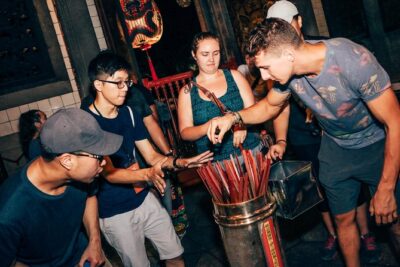
Longshan Temple is your first “anchor” because it shows how older religious life still shapes the city’s rhythm. The temple is located in the heart of West Taipei and serves as a religious center for the local community.
The core story here is migration and community building. Longshan Temple was first established in the 18th century by Chinese immigrants who came to Taipei, and later construction tied the temple to the Monga District area. That long timeline is not just background noise. It helps you understand why the streets around the temple feel like a living neighborhood hub, not a preserved set.
This stop is listed for about 40 minutes, and admission is free. Plan to slow down, watch how people interact with the space, and listen for the guide’s explanations about what visitors believe the temple represents.
A small practical note: temples can be emotionally intense in atmosphere, even when it is not “dramatic.” If you are sensitive to crowds or ceremonies, you will still be fine, but give yourself a moment to settle before you start taking photos.
Bopiliao Historic Block: trade history hidden in a street name
Next you move to Bopiliao, a historic block whose name is commonly described as skin-peeling. That instantly sets the tone: this area carries a story people do not treat like a postcard.
The big idea at Bopiliao is commerce and contact. It used to be the commercial center of northern Taipei, where Chinese immigrants conducted trade with indigenous communities. When you walk this section with a guide, the street becomes more than a route through town. It becomes a record of how different groups interacted, traded, and built a shared urban world.
This stop is about 30 minutes, with free entry listed. You will likely notice how the block feels designed for pedestrian wandering, which is exactly what you want for this section of the tour. It is easier to connect stories to surroundings when you can look up, sideways, and behind you.
If you care about how Taiwan’s history blends different communities, this is one of the most meaningful stops. The guide is using the street to explain relationships, not just eras.
Other Taipei departures on the same line
- Taipei Cooking Class & Market Adventure in Historic Dadaocheng
★ 5.0 · 77 reviews - Taipei’s Origin & Longshan Temple – Taiwan Cultural Tour
★ 4.6 · 19 reviews - Taipei: Cooking Class & Market Adventure Historic Dadaocheng
★ 4.9 · 17 reviews - Taipei Foodie + History Walking Tour
★ 5.0 · 10 reviews
Ximen Red House and Ximending: Japanese-era public space reused in modern Taipei
Then you step into a different kind of history. Ximen Red House started as a public market, with strong architectural characteristics of colonial Japan. After World War II and the retreat of Japanese rule, the building was turned into a theater.
That “same walls, new purpose” detail is the point. Buildings are physical evidence of policy and design choices, but what people do inside them reveals what life turns into after political change.
This section is about 30 minutes, and admission is listed as free. From here you are also in the Ximending area, which is known for being a magnet for people. Even if you do not go wild with shopping, you will appreciate the contrast: history up close in the architecture, plus modern street energy a few steps away.
A practical tip: take photos early or late in this stop. In the middle of the day, this area can be crowded enough that you end up photographing shoulders instead of facades. No big deal, just plan your angles.
Presidential Office Building: from Japanese colonial office to modern political center
From Ximending it is only a short walk to the Presidential Office Building, which functions as the political center of Taiwan. The building was established in 1919 and was initially designed to house the Office of the Governor-General of Taiwan during Japanese colonial rule.
This is a powerful stop because it shows how power can change hands without moving far. The building’s purpose shifted, but the physical statement stayed. Standing here, it is easier to understand how institutions use architecture to signal authority.
The tour allocates about 20 minutes for this stop. That is short by design, because the value is in the quick, clear “what changed, what stayed” explanation. If you want to linger longer, you can, but use the time to capture the main story, then move on with the rest of the tour’s timeline.
One consideration: it is a political site. That can mean tighter crowd flow and more “look but follow the space” rules. Keep your pace patient and your camera ready.
228 Peace Memorial Park: protest memory in a park designed like Europe
Next is 228 Peace Memorial Park. This stop has two layers: design history and political memory.
The park was formerly established in 1908 as Taihoku New Park during the Japanese colonial period, and it is noted as the first European-styled park in Taiwan. Later, in 1947, it became a scene of protest against the Kuomintang-led R.O.C. government.
That combo is what makes this stop land. You are not only learning about a political event. You are also seeing how colonial-era planning decisions shaped what later generations could use as a gathering space.
This stop runs about 30 minutes, and admission is listed as free. It is also the kind of place where you benefit from listening carefully, then taking a quiet pause. If you want to understand the emotional weight of what happened here, slow down for a few minutes instead of rushing through.
If you prefer history that connects to places you can walk in, this park does that well. It is a reminder that public spaces are never just decoration.
Chiang Kai-shek Memorial Hall: a national monument that closes the timeline
The final major stop is Chiang Kai-shek Memorial Hall. It is described as a national monument and landmark, erected in memory of Chiang Kai-shek, who served as President of the Republic of China from 1948 to 1975.
This is the tour’s endpoint because it consolidates the earlier story points into a modern political symbol. The guide’s job is to connect what you saw earlier, temple community life, colonial-era building design, shifting government roles, and protest memory, into the broader question of how national identity gets presented.
This stop is about 30 minutes, with free entry listed. You will likely notice the hall’s scale and formal feel, and it can be a good moment to ask your last big questions to the guide while the timeline is still fresh.
A practical thought: if you have energy left, plan to keep exploring after the tour ends near this area. The finishing location is positioned so you can extend your day without long transit hassles.
Make the most of the tour: shoes, questions, and pacing on foot
The biggest “value booster” on a walking tour is your readiness. Wear comfortable shoes, because the time is short and the tour is designed around movement. You will be in the open air for long enough that you should dress like you expect walking weather.
I also recommend you come with at least two types of questions. One type is simple, like how a building’s design connects to the era. The second type is personal, like what a local would eat nearby, or where the guide thinks you should spend extra time after the walk.
A lot of the best moments come from the guide’s ability to translate history into everyday understanding. Guides named in the experience include Amy and Fu, Amy and Andy, Susie and Huawen, and Pauline, and the common thread is that they keep the explanations engaging in clear English.
Finally, keep your photo routine realistic. You do not need 50 shots of every facade. Pick the two or three spots that connect to the era the guide just explained, and let the rest be for your memory.
Price and what $5 really buys you, plus the tip note
The tour price is $5, and the deal is not just the low number. For that price, you get a professional English guide, plus system fee coverage, and the route includes stops with free admission listed at each attraction.
What you should factor in is that the tip to the tour guide is not included in the booking fee. If this tour teaches you a lot and you enjoyed the guide’s pacing, tipping is the normal way to say thanks in this kind of small-group experience.
For many visitors, the real value of a tour like this is not money saved on tickets. It is your time saved on figuring out what to see and how the sites connect. In about three hours, you get orientation you can build on for the rest of your Taipei trip.
If you are traveling on a tight budget but still want strong context, this is one of the simplest choices to make.
Who this tour fits best, and who might want a different plan
This tour fits best if you want a quick grounding in Taiwanese history and you enjoy walking. It is especially good when it is your first time in Taipei, or your schedule only allows a short time in the west side of town.
It also suits people who like architecture and public spaces. You are not only reading about history, you are seeing how temples, market buildings, parks, and monuments physically express different eras.
If you struggle with longer standing time or prefer very deep museum-style visits, you might find the pace a bit brisk. And if you are bringing kids, you may want to be aware that the tour is story-heavy while still moving between sites.
Still, for most visitors, the mix of religion, architecture, protest memory, and political landmarks keeps the tour from turning into a single-note lecture.
Should you book the Taipei Historic Shared Walking Tour?
Yes, if you want a high-value orientation to Taipei that connects the dots from Qing-era roots through Japanese colonial influence and into modern political symbolism. The combination of free-entry stops, a tight three-hour timeline, and guides praised for clear English and engagement makes it a smart start to a city trip.
Book it especially if you like learning while walking and you want a route that ends in a place you can keep exploring. Choose a different option only if you know you do not do well with walking and on-street timing, or if you need a child-focused format.
If you want Taipei to make sense quickly, this is a great way to get your bearings fast.
Just added on the Taipei side
- Private Taichung Instagram Day Tour from Taipei★ 5.0 · 3 reviews
- From Taipei: Leofoo Village Entry Tickets + Round Trip Bus★ 2.7 · 3 reviews
- Yilan 1-Day Private Tour to Kavalan Whisky & Cultural Gems★ 4.5 · 3 reviews
- Best of Taiwan 9 Days Tour★ 3.5 · 3 reviews
- Keelung Shore Excursion: Private 6H Natural Wonder & Seafood Tour★ 5.0 · 3 reviews
- One-way Private Transfer between Jiufen and Taipei★ 5.0 · 3 reviews
- Taipei Cherry Blossom Day Tour to Yangmingshan and Tamsui★ 4.5 · 3 reviews
- 12hrs – Chiayi Meteor Garden Classic Tour From Taipei★ 5.0 · 3 reviews
Walking Tours in Taipei, compared.
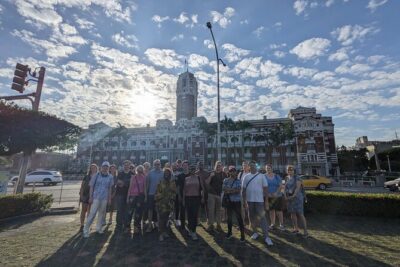
Taipei Old Town – Taiwan Introduction Walking Tour (Tip-Based)
Read our review →![[Private Tour] Shilin Night Market Walking Tour With a Private Tour Guide (2-hr)](https://image.lovingtaiwan.com/wp-content/uploads/private-tour-shilin-night-market-walking-tour-with-a-private-tour-guide-2-hr-400x266.jpg)
[Private Tour] Shilin Night Market Walking Tour With a Private Tour Guide (2-hr)
Read our review →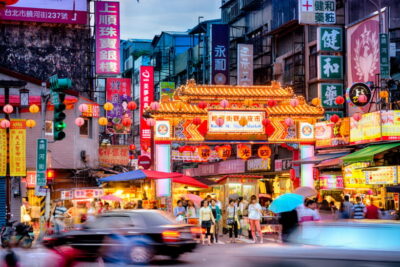
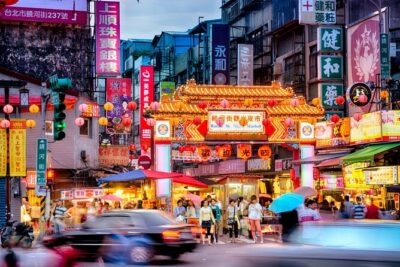
2-hr Raohe Night Market Walking Private Tour with a Tour Guide
Read our review →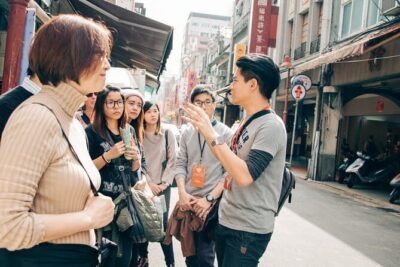
Vintage Taipei – Best of Taiwan & Sunset Walking Tour (Tip-based)
Read our review →
Taipei’s Origin & Longshan Temple – Taiwan Cultural Walking Tour
Read our review →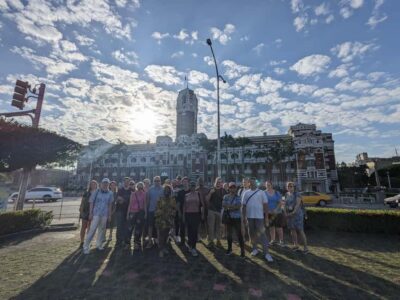
Browse the lists this tour appears in