
Reviewed · TAIWANESE FOOD TOURS
Street Food Cooking Class in Taipei : Gua Bao/Lu Rou Fan/Boba Tea
This is interesting because you are not just tasting Taipei street food, you are learning how it is built, step by step. The focus is on xiao chi small eats, which means classic, everyday flavors, not fancy restaurant versions.
I especially like two things. First, the class is small-group (up to 8), so you get real help while you’re working. Second, you leave with hands-on skills for gua bao, lu rou fan, and bubble tea, not just a list of where to eat.
One consideration: bubble tea, in particular the tapioca pearls, can be a little tricky on first try. Come ready to follow instructions closely, and don’t plan on rushing during the 2 hours.
Key things I’d watch for
- Up to 8 people means better coaching while you cook, not just watching.
- Gua bao + pork belly braise teaches the core Taiwanese street flavor you’ll taste in a lot of dishes.
- Tapioca pearls from scratch and shaking your own bubble milk tea, not a shortcut version.
- You eat at the end, so the class ends as a meal, not just a demo.
- Recipe book as a souvenir, useful if you want to repeat the dishes at home.
Why Taipei xiao chi cooking beats a food walk
Taipei street food is famous for a reason. The best stuff tastes simple, but it is built with smart techniques, timing, and the right texture. A cooking class is a fast way to understand that.
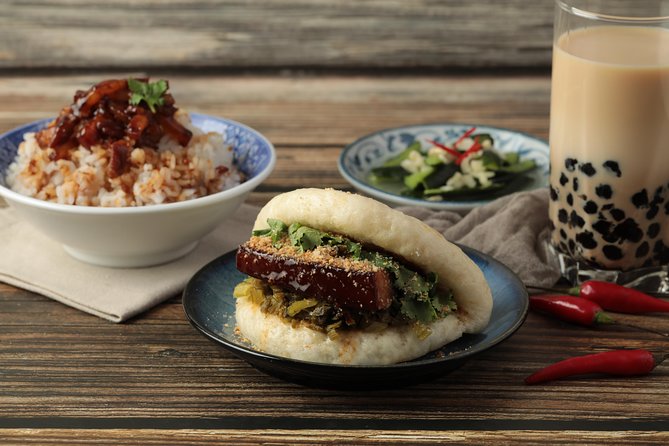
With this class, you work with classic xiao chi favorites like gua bao (Taiwanese pork belly inside a steamed bun) and lu rou fan (braised pork on rice). Then you finish with bubble milk tea, the drink that turned Taiwanese street stalls into a worldwide obsession. You get the why behind the flavors, because you are doing the steps, not just sampling a bite.
Also, the format matters. When you cook in a small group, you learn what goes wrong. You notice if the braise is too sweet or too heavy. You see what makes buns soft. You understand why tapioca pearls need the right chew, not just the right size.
More kitchens taking bookings in Taipei:
- Xiao Long Bao, Beef Noodles & Boba Tea Cooking Class in Taipei
★ 5.0 · 159 reviews - Xiao Long Bao, Chicken vermicelli with mushroom and sesame oil, Tofu strips salad, Bubble milk tea. Taiwan Traditional Delicacies Experience-A (Taipei Cooking Class)
★ 5.0 · 79 reviews - Taipei Cooking Class & Market Adventure in Historic Dadaocheng
★ 5.0 · 77 reviews
Getting to CookInn Taiwan for a 2:30 pm class
The class meets at CookInn Taiwan (Zhongshan 教室) at 103, Zhongshan area in Taipei, Datong District, Section 1, Chengde Rd, 66號2樓. The start time is 2:30 pm, and the class runs for about 2 hours. It ends back at the meeting point.
You’ll use a mobile ticket, which is convenient. You also get confirmation at booking time, so you can plan your afternoon without scrambling.
Practical timing tip: since it is a mid-afternoon start, you can eat a small light snack beforehand, but don’t kill your appetite. The class is designed so you’re hungry by the time you sit down for the meal at the end.
One more practical point: you’re cooking in a guided kitchen, so expect to be hands-on right away. Wear something comfortable you don’t mind getting a little kitchen-smudged. Taipei is warm, and you’ll probably be standing and working for portions of the 2 hours.
Building gua bao: steam buns and braised pork belly tips
Gua bao is often called the Taiwanese hamburger, but the magic is in the texture and the balance. The bun is soft and steamy, the pork is rich and tender, and the whole thing is brightened by toppings.
In this class, you focus on two key skills:
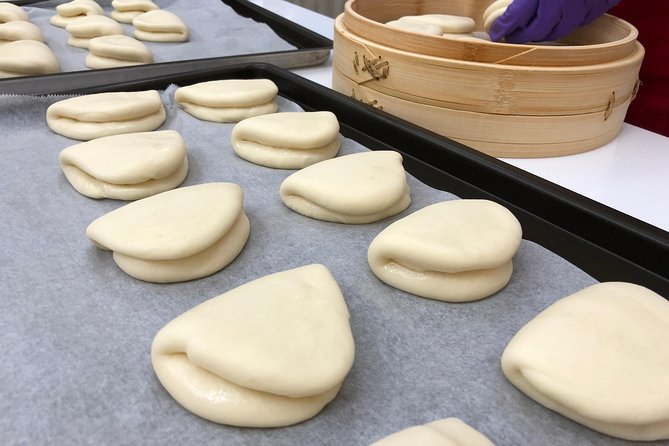
Steam buns for gua bao
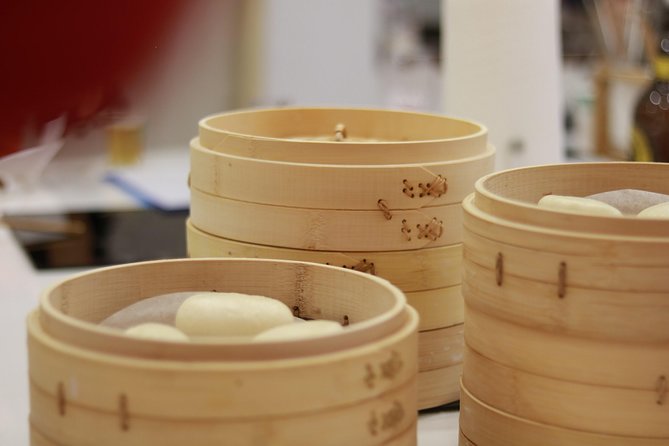
You learn how to make the bun part from scratch. Even if you have made bread before, steamed buns behave differently than baked items. The guide’s instruction helps you understand how to get the right softness without turning them sticky or uneven.
The big takeaway is texture control. You’ll learn what to watch for as the buns come together, so you’re not guessing. If you’ve ever wondered why some gua bao buns feel light and pillow-y while others taste heavy, this is exactly where the difference starts.
Where else to eat your way through Taipei:
- The Award-Winning Private Food Tour of Taipei: The 10 Tastings
★ 5.0 · 716 reviews - Taipei: Food Tours w/ Top 10 Taiwan Food (Breakfast/Dinner)
★ 4.7 · 517 reviews - Taipei: Private Food Tour – 10 Tastings with Locals
★ 4.9 · 218 reviews - Taipei: Street Food & Hidden Eats Night Market Food Tour
★ 4.8 · 112 reviews
Braising pork belly, the flavor engine
You also get tips to braise classic pork belly, the core of both gua bao and lu rou fan. Braising is where Taiwanese street flavor gets built: soy and aromatics create depth, and a controlled simmer turns fatty pork into something that eats like silk.
This is not about memorizing a complicated recipe. It is about learning how to steer the braise. When the guide shows you what “good” looks like, you can repeat it at home later, even with a smaller kitchen setup.
From the class flow, gua bao becomes your confidence dish. One student comment described the pork belly as delicious, and the bun pork combo as the star. That tracks, because gua bao is the moment where your work and the Taiwanese comfort flavor click together.
Lu rou fan: turning the braise into a real meal
Lu rou fan is sometimes described as braised pork rice, but that’s too simple. It is one of those dishes where the braise quality shows up clearly because rice just acts as a base.
In your class, you learn how the pork belly braise becomes a top for rice. One person’s takeaway was that they made the braised pork and then used it on rice, which gave the classic lu rou fan structure. That is a smart way to think about it. The same braise can travel into gua bao, into rice bowls, and into other Taiwanese favorites.
What I like about learning this: lu rou fan is forgiving in a good way. If your rice is hot and your braise is rich, you can assemble quickly after the cooking steps. That matters because cooking classes are time-limited. You get a full meal outcome at the end, and it feels like you got your money’s worth.
Taste notes to expect: the pork should be savory and deep, not just salty. The sauce coats the meat, and the fat should blend in rather than feel greasy. If you’ve been buying lu rou fan and wondered why some versions taste lighter, the answer is usually in how the braise is cooked down and how the pork is handled before serving.
Bubble milk tea and tapioca pearls from scratch
Bubble tea can seem like a gimmick until you make tapioca pearls yourself. Then you understand the real challenge: getting the chewy texture right.
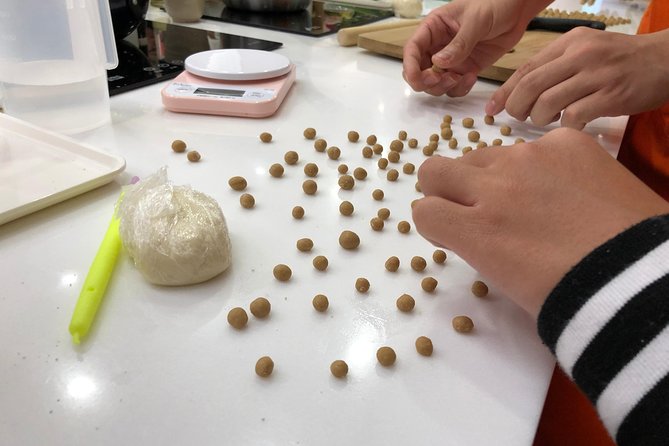
During the class, you make the chewy tapioca pearl from scratch. You also shake a cup of bubble milk tea by yourself, which is fun and very Taipei. It also helps you understand how sweetness and tea flavor come together.
Why the pearls are the hard part
The pearls require attention. If you cook them too little, they can be firm and chalky. Too long, and they can lose that springy chew. In a 2-hour class, there’s usually no room for distractions, so it’s a good exercise in focus.
One helpful detail from a class experience: someone said the boba process was amazing but also hard. That’s honest. If you’ve never done pearls before, expect a learning curve. The guide’s instruction is what makes it work.
Shaking your drink
The end result is a cup you made with your own hands. When you shake it, you understand the foam and mixing. It changes the texture of how the drink feels in your mouth, not just how it tastes.
This part is also a great “souvenir skill.” Bubble tea is not just something you order. It becomes something you can make and tweak later.
The meal moment: what you’ll sit down to eat
The class is designed so you end with what you make. You come hungry, and you finish with a homemade meal instead of leaving with just takeout containers.
At minimum, your meal experience centers around your gua bao and your lu rou fan. You also have your bubble milk tea as the finishing drink. In one experience, the person emphasized that the gua bao and braised pork were the highlight, which makes sense because both rely on the same underlying technique: braising and texture.
This is also a good time to compare what you made versus what you normally buy outside. At home you tend to focus on taste. In class you get to focus on process too. You notice if the pork is too thick in sauce, if the bun is too dense, or if the drink sweetness is imbalanced. That helps you improve when you cook again later.
And since the group is small, you can usually ask questions while you eat. If you want to replicate the dishes later, this is the moment to confirm specific points like timing, sauce thickness, or how to store any components.
Price and value: is $79 per person worth it?
At $79 per person, this class isn’t “cheap eats.” But it also isn’t just a guided stroll with snacks. You are paying for coached cooking, ingredients, and a final meal, all within a 2-hour block.
Here’s why the value usually feels good for people:
- Small group size up to 8: you’re not competing for the instructor’s attention.
- Hands-on tasks: bun making, pork braise guidance, tapioca pearls, and making your drink.
- You eat at the end: the outcome is a real meal, not only samples.
- A recipe book: at least one person described it as a great souvenir and noted it helps them cook at home again. That turns your experience into something you can use.
If you compare it to doing everything independently, cooking at home will cost money too, especially for ingredients and the time. The big difference is that here you get the technique from a teacher. Learning the braise and pearls is where guidance saves you the most effort.
If you are a confident cook who already understands Taiwanese braises and pearl textures, you might feel it’s more about guidance than discovery. But for most visitors, the skills transfer is the point, and that is where $79 starts to make sense.
Who should book this Taipei street food cooking class
This is a strong fit if:
- You want a hands-on experience rather than a walking tour.
- You like street food flavors and want to understand the mechanics behind them.
- You want a small group class with personal attention.
- You want skills that travel home with you: gua bao, lu rou fan, and bubble tea.
It is also a decent option for families. One experience described the instructor as patient with kids aged 8, 10, and 11. If you’re traveling with children who like cooking or watching technique up close, this can be a fun afternoon activity.
Who might want another option:
- If you are the type who hates kitchen mess or quick temperature-timing tasks, the tapioca pearl steps may feel stressful.
- If your schedule is tight, a single 2-hour class might feel short. It’s designed to cover key dishes, not every street food variation in Taipei.
Should you book this class?
If you want Taipei street food in a way you can actually repeat, book it. This class focuses on the core “make it yourself” lessons: braising for pork flavor, steamed bun texture, and tapioca pearl chew. The payoff is real, because you sit down to eat what you cooked.
The best decision rule is simple: if you like eating, but you also like learning how food works, you’ll enjoy this much more than a snack-focused tour. If you just want a quick taste and a photo, you may find it slower than you expected.
If you go, come hungry, and give the pearls your full attention. That one skill is where the experience turns from fun to genuinely useful.
FAQ
Where does the class meet?
It meets at CookInn Taiwan (Zhongshan 中山教室), 103, Section 1, Chengde Rd, 66號2樓, Datong District, Taipei City, Taiwan.
What time does the class start, and how long does it last?
The start time is 2:30 pm, and the duration is about 2 hours.
How many people are in the group?
The class has a maximum of 8 travelers.
What dishes will I learn to make?
You’ll learn how to make gua bao (including steam buns), learn tips for braising pork belly for gua bao, make lu rou fan, and make bubble milk tea, including tapioca pearls from scratch.
Do I eat during or after the class?
Yes. You end class by sitting down to enjoy your homemade meal.
Is the ticket digital?
Yes, it uses a mobile ticket.
Do I get anything to take home?
You receive a recipe book, which can be used as a souvenir and to help you cook again at home.
What is the cancellation policy?
You can cancel for a full refund up to 24 hours before the experience’s start time. If you cancel less than 24 hours before, the amount paid is not refunded.
More Food & Drink in Taipei
- Taipei Hidden Eats, Market & Street Food Tour with 8+ Tastings
★ 5.0 · 109 reviews - Taipei Food Tour: Night Market & Convenience Store(Food Included)
★ 4.5 · 100 reviews - Traditional Old School Taiwanese Food Tour
★ 5.0 · 36 reviews - Taipei Street Food & Night Market Tour with a Local: Private & Custom
★ 4.5 · 35 reviews
More Cooking Classes in Taipei
- Xiao Long Bao & Boba Tea Cooking Class in Taipei
★ 5.0 · 28 reviews - Xiao Long Bao, Pork thick soup, Bubble milk tea. Taiwan Traditional Light Meals Experience-B (Taipei Cooking Class)
★ 5.0 · 24 reviews - Xiao long bao, Pork thick soup, Bubble milk tea. (Taiwan Cooking Class)-B
★ 5.0 · 18 reviews - Taiwanese Gourmet Cooking Class in Taipei
★ 5.0 · 18 reviews
Just added on the Taipei side
- Private Taichung Instagram Day Tour from Taipei★ 5.0 · 3 reviews
- From Taipei: Leofoo Village Entry Tickets + Round Trip Bus★ 2.7 · 3 reviews
- Yilan 1-Day Private Tour to Kavalan Whisky & Cultural Gems★ 4.5 · 3 reviews
- Best of Taiwan 9 Days Tour★ 3.5 · 3 reviews
- Keelung Shore Excursion: Private 6H Natural Wonder & Seafood Tour★ 5.0 · 3 reviews
- One-way Private Transfer between Jiufen and Taipei★ 5.0 · 3 reviews
- Taipei Cherry Blossom Day Tour to Yangmingshan and Tamsui★ 4.5 · 3 reviews
- 12hrs – Chiayi Meteor Garden Classic Tour From Taipei★ 5.0 · 3 reviews
Taiwanese Food Tours, compared.
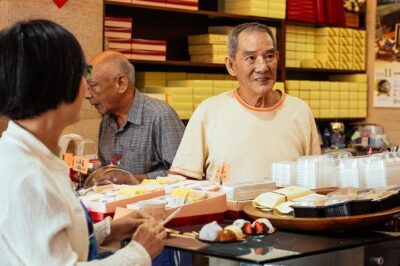
The Award-Winning Private Food Tour of Taipei: The 10 Tastings
Read our review →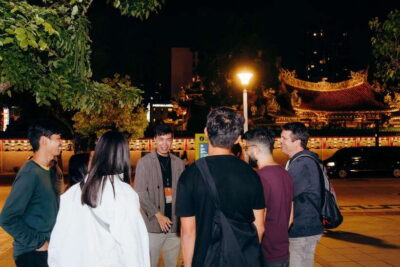
Food Tours w/ Top 10 Taiwan Food (Breakfast/Dinner)
Read our review →
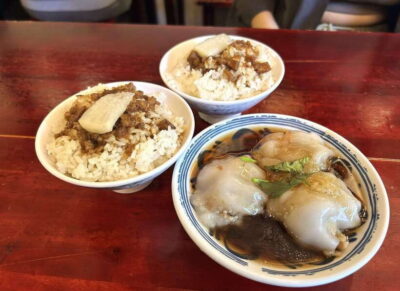
Street Food & Hidden Eats Night Market Food Tour
Read our review →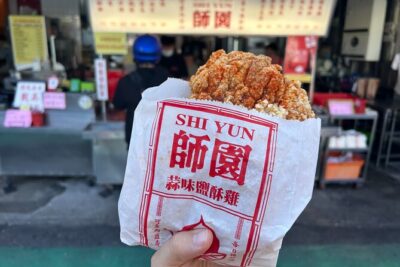
Taipei Hidden Eats, Market & Street Food Tour with 8+ Tastings
Read our review →
Taipei Food Tour: Night Market & Convenience Store(Food Included)
Read our review →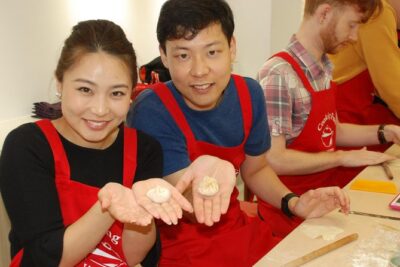
Browse the lists this tour appears in